












导语:Author: Compiled by Duc Minh Vietnam International Financial Center (VIFC): Opportunities for pioneering investorsAt pivotal moments in economic history, the greatest opportunities often arise when a new growth structure begins to take shape.
VIETNAM - ASIA'S NEW GENERATION FINANCIAL GATEWAY
Author: Compiled by Duc Minh
Vietnam International Financial Center (VIFC): Opportunities for pioneering investors
At pivotal moments in economic history, the greatest opportunities often arise when a new growth structure begins to take shape. Vietnam stands at precisely such a juncture today.
The establishment of the Vietnam International Financial Center (VIFC) marks a strategic step in the journey to position Vietnam as a regional hub connecting capital, technology, and knowledge. Designed around a "one center, two locations" model spanning Ho Chi Minh City and Da Nang, the VIFC is not merely a new financial institution but a strategic national framework aimed at attracting international capital flows, advanced financial technology, and high-quality human capital.
Amidst the restructuring of global capital flows and the continued shift of economic growth toward the Asia-Pacific region, the VIFC is positioned as a next-generation financial platform, enabling Vietnam to integrate more deeply into the international financial network with a proactive and formative role.
After nearly four decades of *Doi Moi* (Renovation), Vietnam has emerged as one of Asia’s most dynamic economies, underpinned by robust manufacturing, export capabilities, and increasingly extensive international integration.
However, to advance into the ranks of high-income nations, Vietnam requires a modern financial system capable of mobilizing, allocating, and directing capital flows on both regional and global scales.
It is against this backdrop, and under the leadership of the Communist Party of Vietnam and the decisive direction of General Secretary To Lam and Prime Minister Le Minh Hung, that the Vietnam International Financial Center has been established as a strategic institutional breakthrough, creating momentum for the country's new phase of development.
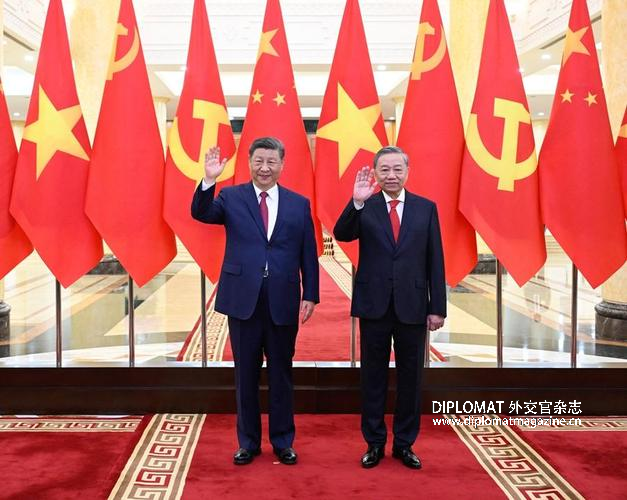
General Secretary of the Communist Party of Vietnam Central Committee and State President To Lam made a state visit to China from April 14 to 17, 2026
VIFC: A new pillar in the global financial integration strategy
The establishment of the VIFC marks a pivotal shift for Vietnam from an economy that primarily attracts investment capital to one capable of connecting, allocating, and steering regional capital flows.
The history of financial hubs such as Singapore, Hong Kong, and Dubai demonstrate that the greatest investment value often emerges during the initial formation stage. Early participants typically gain a significant advantage as the financial ecosystem matures and expands.
Vietnam currently possesses many favorable conditions for establishing an emerging financial hub: a population of nearly 100 million, a rapidly growing middle class, an extensive network of free trade agreements, a stable political environment, and one of the highest economic growth rates in the region.
For international investors, participating in the VIFC is not merely about expanding their presence into a new market; it is an opportunity to be part of a long-term growth cycle currently taking shape.
At a meeting with the Ministry of Finance and relevant agencies on June 2, 2026, Prime Minister Le Minh Hung emphasized the need to bring the International Financial Center (VIFC) into substantive operation as soon as possible, while continuing to refine breakthrough mechanisms to ensure an investment environment that is competitive on a global scale. This message signals that the VIFC has transitioned from the planning phase to the implementation phase with strong political resolve.
Vietnam’s overarching vision is to build a "smart, digital, and green" financial center, developed upon foundations of digital technology, green finance, fintech, artificial intelligence, and the data economy. This approach reflects a new generation of financial centers—one that is more flexible and capable of rapidly adapting to shifts in the global economy.
Prime Minister Le Minh Hung also directed competent agencies to focus on developing distinctive financial products and services, identifying this as the decisive factor for the VIFC's success. Key areas of focus include green finance products, international trade finance, capital mobilization for large-scale infrastructure, fintech solutions, and cross-border financial services tailored to the needs of global investors.
"One Center – Two Destinations" model
The distinctive feature of the VIFC is its dual-hub model, operating within a unified institutional framework.
Ho Chi Minh City is positioned as the VIFC’s international capital market hub. Leveraging its role as an economic engine, a dynamic business ecosystem, and the emerging Thu Thiem financial district, the city aims to become a regional gateway for cross-border capital transactions, IPOs, M&A activities, and international bond issuances.
Meanwhile, Da Nang is positioned as a hub for green finance and innovation, focusing on fintech, AI, blockchain, data centers, and sustainable financial products. Modern digital infrastructure and a high quality of life give the city a competitive edge in attracting international experts and fintech research centers.
These two hubs complement rather than compete with each other, creating a flexible structure capable of adapting to emerging trends in global finance.
Even in its initial phase, the VIFC has secured nearly US$10 billion in committed capital for infrastructure, data, and financial services. This serves as a positive signal, reflecting the international investment community's confidence in Vietnam's long-term prospects.

Ho Chi Minh City, Viet Nam
Transparent institutional framework and incentives for pioneering investors
An international financial center can only succeed if it possesses an institutional framework that is transparent, stable, and highly predictable.
VIFC operates under a specialized legal framework established by specific Government decrees, creating an institutional environment that is internationally competitive while ensuring transparency and systemic safety.
The adoption of international standards—such as IFRS and Basel—alongside a regulatory sandbox mechanism for innovation, demonstrates Vietnam's commitment to deep and broad integration.
At a meeting on June 2, 2026, Prime Minister Le Minh Hung reiterated the need to establish supervision and risk management mechanisms aligned with international standards, ensuring a balance between fostering innovation and maintaining financial stability. This is a crucial factor for global financial institutions when considering long-term investment decisions.
A key factor driving VIFC’s distinct competitive advantage is its superior incentive policies, which are among the most competitive in the region. Under current regulations, priority projects—such as those in fintech, green finance, artificial intelligence, semiconductors, and data centers—benefit from a 10% corporate income tax rate for 30 years, accompanied by extended tax exemption and reduction periods.
For non-priority projects, a 15% tax rate over 15 years remains attractive compared to many other countries in the region. However, tax incentives are only part of the picture. More importantly, the policy sends a clear message: Vietnam is ready to share long-term benefits with investors and partner with them throughout the entire project lifecycle.
In particular, the talent attraction policy is designed with a long-term vision and implemented comprehensively. Exempting personal income tax for experts, scientists, and senior executives during the initial phase of their operations not only provides a financial incentive but also demonstrates a high regard for intellectual capital.
Programs such as the Golden Visa and Talent Visa—offering terms of up to 10 years, streamlined procedures, and clear pathways to permanent residency—position Vietnam as an attractive destination for international professionals seeking new career opportunities in Asia.
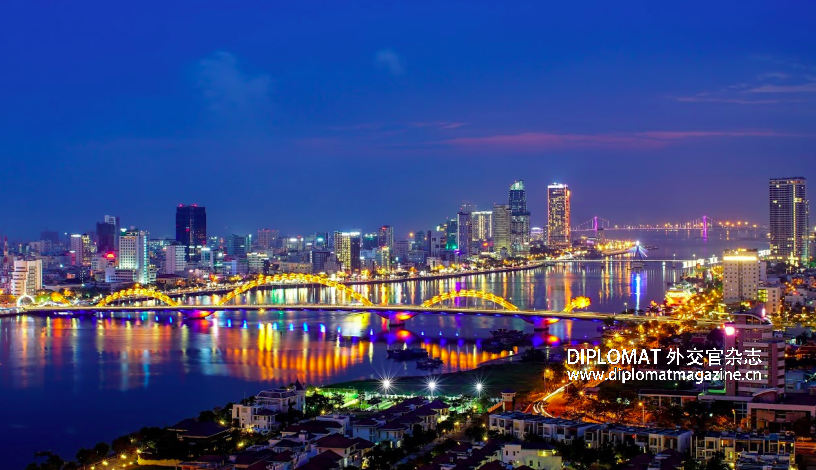
Da Nang City, Viet Nam
Financial ecosystem for a new growth phase
VIFC is being established not only to attract capital but also to create a comprehensive financial ecosystem where investment banks, investment funds, technology companies, fintech firms, and data centers can thrive together.
In line with the Government's strategic direction, VIFC will serve as a platform for mobilizing and allocating resources to strategic projects in Vietnam and the region—spanning sectors such as transport infrastructure, renewable energy, digital transformation, and high-tech industries.
Sustainable development is also a key pillar of VIFC. Green finance, ESG investment, and the energy transition have been identified as priority areas, aligning with Vietnam's net-zero commitment and global investment trends.
An opportunity for pioneering investors
For the international financial community, the greatest value often lies not in entering a market only after it has matured, but in the ability to identify and partner with emerging growth hubs from their very inception.
VIFC is opening up precisely that opportunity.
Driven by strong government commitment, an increasingly robust institutional framework, and a development strategy centered on innovation, green finance, and digital technology, Vietnam is laying the groundwork for a financial hub capable of serving not only the domestic market but also the broader ASEAN and Asia-Pacific regions.
Vietnam is doing more than simply inviting investment; it is inviting global partners to join in building a new financial hub for Asia—a place where pioneering decisions made today can generate exceptional value for decades to come.