













导语:China is a key partner in Uzbekistan’s transformation. Their wide-ranging strategic partnership is built on political trust, expanding economic ties, and a common commitment to a steady and flourishing Central Asia.
From Transport Corridors to Production Ecosystems:
A New Horizon for China–Uzbekistan Cooperation
By Eldor Tulyakov
Executive Director, Development Strategy Centre, Uzbekistan
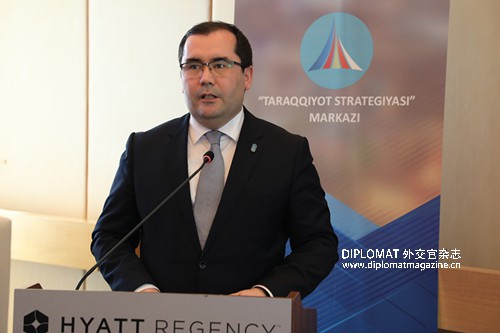
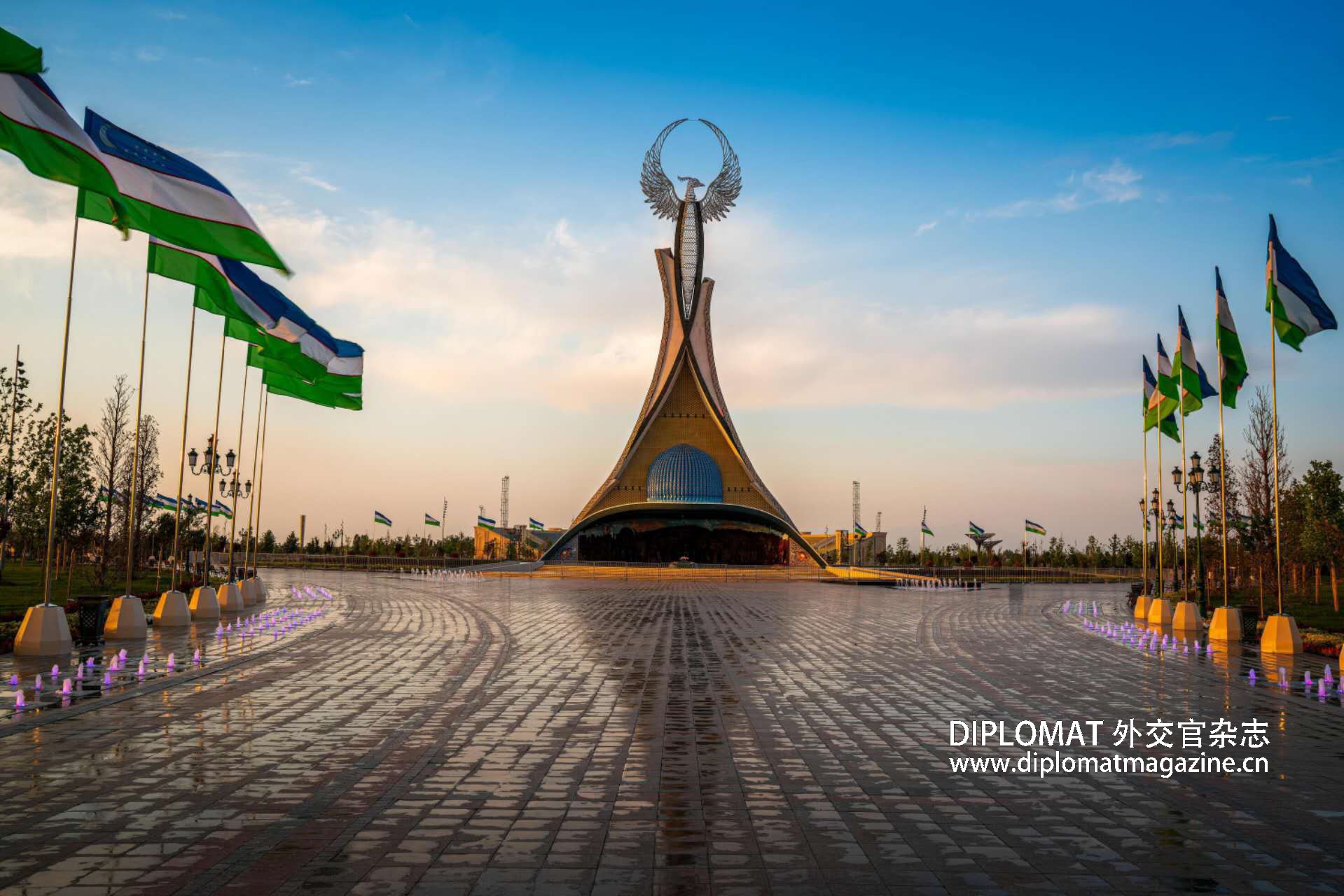
The 35th anniversary of Uzbekistan’s independence in 2026 offers an opportunity to assess the country’s priorities and their significance for international partners.
Over the past three and a half decades, Uzbekistan has strengthened its sovereignty, modernised institutions, and expanded global engagement. The next phase of growth must focus on productivity, technology, skills, and deeper inclusion in regional and global value chains.
China is a key partner in Uzbekistan’s transformation. Their wide-ranging strategic partnership is built on political trust, expanding economic ties, and a common commitment to a steady and flourishing Central Asia.
The updated “Uzbekistan–2030” Strategy supplies a framework for bilateral projects in industry, investment, exports, digitalisation, human capital, green energy, water management, transport and regional cooperation.
Uzbekistan aims to raise GDP to over US$240 billion and GDP per capita to US$5,800 by 2030. However, the Strategy prioritises not just expansion, but additionally increased productivity, technological development, and domestic value added to achieve upper-middle-income status.
Industrial modernisation is key to this strategy. Uzbekistan plans to process more natural resources domestically, manufacture higher-value products, and increase participation in international production networks. Industrial value added is projected to reach US$60 billion by 2030.
China’s experience is particularly relevant. Its transformation remained driven by production ecosystems that connect infrastructure, technology, skills, logistics, and export policy. While Uzbekistan does not intend to replicate this model, it recognises that durable growth depends on industrial capability and inclusion in value chains.
This principle should guide the next phase of economic relations. The shift from a traditional “loan–equipment–construction” model to one centred on “investment, localisation, and technology transfer” marks a significant policy evolution, with important consequences for the standard and endurance of Uzbekistan–China cooperation. Moving beyond simple infrastructure provision, this new approach prioritises the co-development of industrial capabilities and technological expertise within Uzbekistan. In this system, Chinese investment not just establishes new production capacity but also operates as a driving force for technology absorption and skill development among Uzbek suppliers, engineers, and specialists. This deeper integration intends to promote a self-sustaining industrial ecosystem that can drive economic diversification and resilience. Consequently, goods produced through such cooperative efforts will be more likely to satisfy domestic demand, penetrate regional Central Asian markets, and achieve competitiveness in third-country exports. Ultimately, this policy shift supports Uzbekistan’s wider goal of local economic integration and sustainable development by embedding long-term value creation and knowledge transfer within bilateral projects.
Priority sectors include electric vehicles and components, batteries, solar panels, electrical equipment, chemicals, pharmaceuticals, agricultural machinery, digital equipment, and water-management technologies. China brings strong capabilities in these areas, while Uzbekistan offers growing demand, a young workforce, and access to expanding regional markets.
The Strategy includes over 400 key technological and infrastructure projects valued at approximately US$150 billion. Uzbekistan desires not only investment volume, but also high developmental quality. Projects should transfer technology, create stable employment, expand exports, and strengthen domestic production.
Uzbekistan aims to increase exports of goods and services to US$67 billion by 2030. The number of exporting enterprises is expected to grow from about 6,500 to 15,000, with finished and semi-finished goods making up 70 per cent of exports. China can support these goals through industrial partnerships, certification, logistics, e-commerce, and cooperation in third-country markets.
Digitalisation is another key focus. Uzbekistan plans to increase digital-service exports to US$5 billion and train millions in digital technologies and artificial intelligence. AI will be introduced across manufacturing, agriculture, healthcare, education, transport, public services, and urban management.
Bilateral cooperation should prioritise digital infrastructure, joint applications, and professional training. Smart monitoring can reduce water losses, predictive systems can minimise industrial downtime, and digital logistics can accelerate delivery times.
Green energy is also a priority. Uzbekistan plans for renewables to supply 54 per cent of electricity by 2030, with installed renewable capacity reaching 25 gigawatts. China’s expertise in solar and wind equipment, storage, grid technology, and electric transport provides a firm foundation for cooperation.
Water administration is another priority. Uzbekistan aims to improve water-use efficiency by 25 per cent, expand water-efficient technologies, and modernise irrigation. Chinese solutions in drip irrigation, remote sensing, smart agriculture, and digital water management can directly support economic and food security.
Transport connectivity is fundamental. For landlocked Uzbekistan, diversified routes are critical for security and access to global markets. The China–Kyrgyzstan–Uzbekistan railway should be seen not only as a transport project, but also as a foundation for industrial zones, logistics centres, and new regional growth hubs.

This approach corresponds with Uzbekistan’s vision for the Belt and Road Initiative. The goal is to move beyond being a transit territory, transforming transport corridors into economic corridors and individual projects into production ecosystems.
Central Asian cooperation provides important context. Uzbekistan aims to increase trade with neighbouring countries to US$15 billion by 2030. To achieve this, it will pursue an open and balanced regional approach, welcoming collaboration with all partners. While deepening its important partnership with China, Uzbekistan is also committed to strengthening bilateral and multilateral cooperation within Central Asia and with immediate neighbours. The objective is to ensure regional integration is inclusive, transparent, and mutually beneficial, enabling Uzbekistan to leverage opportunities with China and encourage trust and development across the region. A better connected region offers China reliable routes, larger markets, and stronger conditions for regional production networks.
For China, the “Uzbekistan–2030” Strategy identifies priority sectors, creates a basis for systematic industrial and technological cooperation, and supports stability, connectivity and sustainable development across Central Asia.
As Uzbekistan marks 35 years of independence, its partnership with China is entering a more mature and strategically important stage. Therefore, the effectiveness of this developing relationship should be evaluated not solely by increases in trade volumes or the signing of bilateral agreements, but more critically by the extent to which both countries can generate sustainable shared value, foster human capital development, strengthen scientific collaboration, and jointly engage complex regional and global challenges. Such an evaluative framework stresses the importance of moving beyond quantitative measures to assess the qualitative impacts of cooperation, making sure that the partnership delivers meaningful and sustained benefits for both countries.
Based on this foundation, both China and Uzbekistan should prioritise establishing joint innovation centres, expanding vocational training programs, and promoting technology transfer through formal policy schemes. Furthermore, the countries should develop coordinated mechanisms for monitoring project outcomes and assisting regular dialogue among industrial stakeholders to ensure ongoing conformity with the “Uzbekistan–2030” Strategy. Through enacting these focused policy measures, the partnership can be strengthened, resulting in sustainable and integrative development for both countries.